

Why you're sore after swimming, and how long it lasts

Swimming avoids repeated foot strikes but still involves many repeated strokes. Note whether soreness follows a change in distance, stroke or training equipment; persistent shoulder pain is not something to swim through.

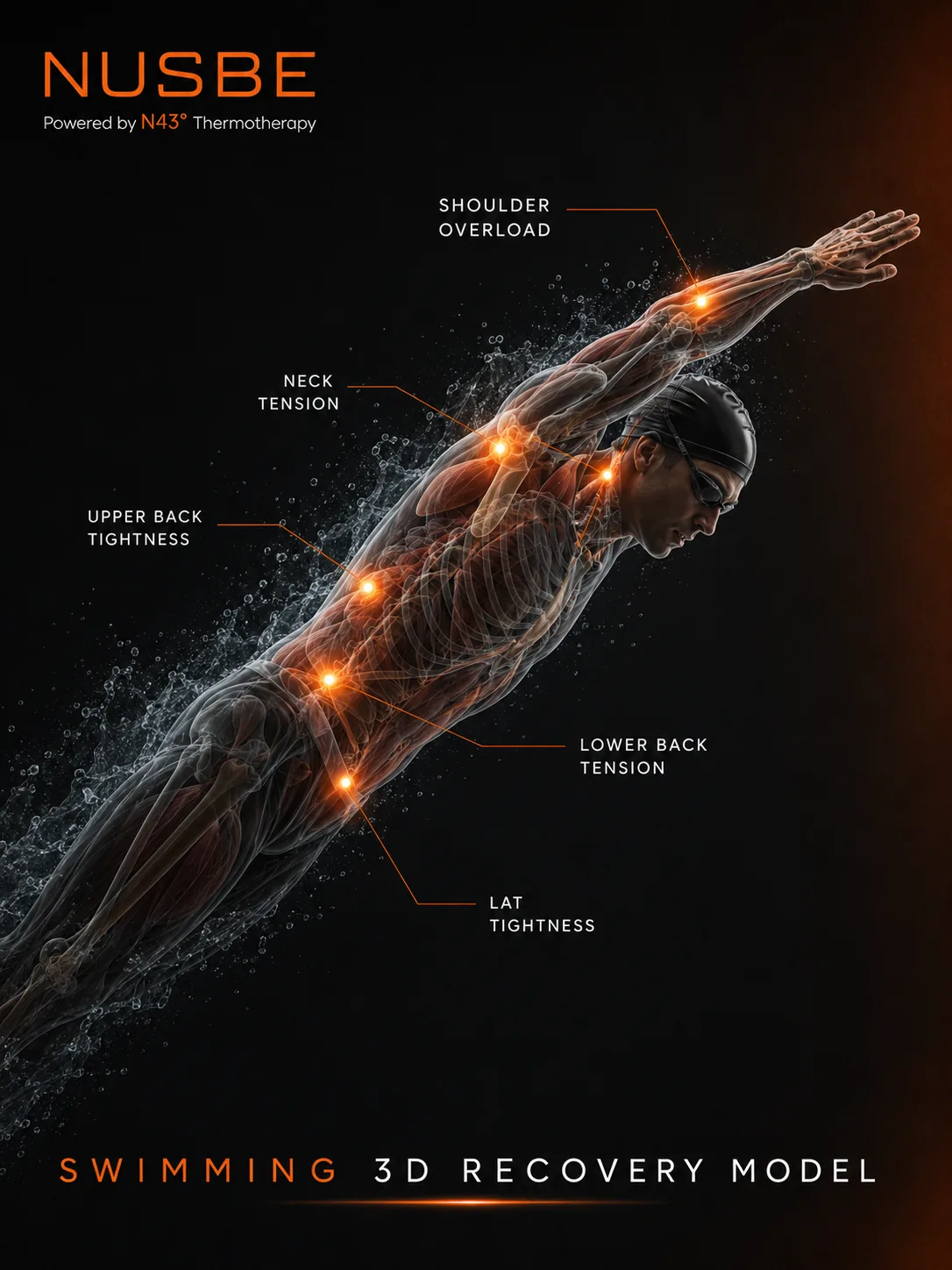
Swimming recovery model showing shoulder, upper back, neck, lower back and calf load areas
Swimming recovery model — shoulders, upper back, neck, lower back and calves.

What to notice

Compare the actual sets, not only total lengths. Sprint sets, pulling with paddles and a new stroke are different demands even at the same distance.

Practical next steps

  • Tell your coach which stroke and point in the session bring symptoms on.
  • Reduce or stop the painful set rather than adding equipment to work around it.
  • Return to added distance or intensity progressively once your plan and symptoms allow.

When to get help

Seek urgent assessment for sudden severe shoulder pain, a changed shape, inability to move the arm or persistent numbness. Arrange a review if pain keeps returning or does not improve.

Exploring NUSBE

NUSBE offers operator-guided thermotherapy wellness sessions. Discuss suitability first; this does not replace an injury assessment. See the session experience.

Frequently asked questions

Is all post-swim shoulder soreness swimmer’s shoulder?

No. That label does not identify a specific diagnosis. Recurring pain, weakness or reduced movement needs an assessment of the shoulder and your swimming demands.

How long does ordinary post-exercise soreness last?

Delayed muscle soreness often appears one to three days after unfamiliar activity and usually eases over the following few days. That pattern does not explain sudden injury pain or symptoms that keep worsening.

Evidence referenced in this guide

Related guides

Explore the evidence

Request a NUSBE session