
Why you're sore after a long run, and how long it lasts

A long run can bring delayed muscle soreness, especially when it is longer, hillier or faster than your usual training. Pinpoint pain, a limp or symptoms that worsen should not be written off as normal recovery.

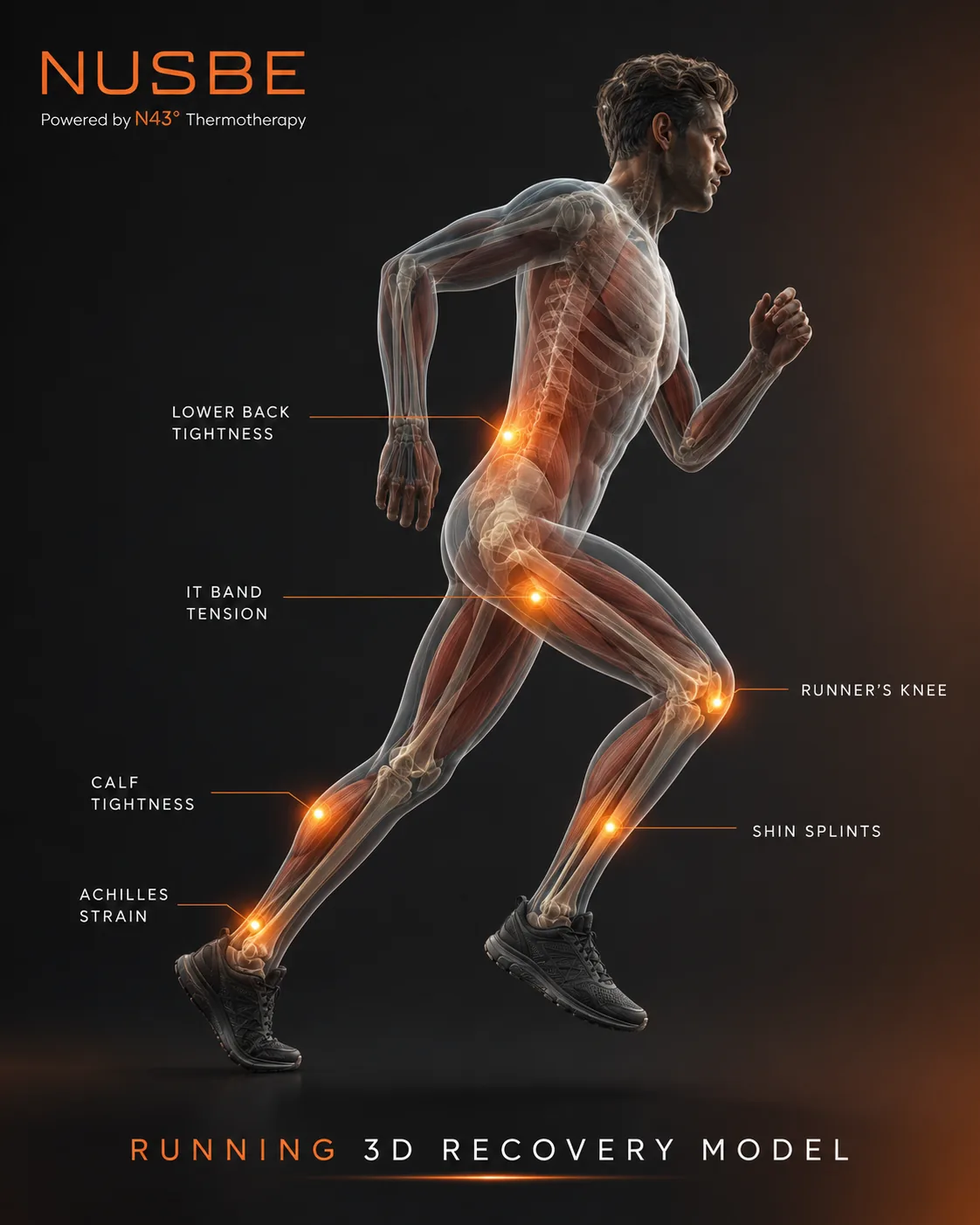
Running recovery model showing lower back, hip, hamstring, knee, calf and Achilles load areas
Running recovery model — lower back, hips, hamstrings, knees, calves and Achilles.

What to notice

Review the whole run: duration, terrain, pace and weather. Your next session should respond to how you feel, rather than simply completing the next line of a training plan.

Practical next steps

  • Notice whether everyday walking is comfortable before considering another run.
  • Keep comfortable movement light; do not use a hard run to test a painful area.
  • Review an unusually hard long run with your coach before adding distance or speed again.

When to get help

Unexpectedly severe muscle pain, dark urine or marked weakness after exercise needs prompt medical attention. Persistent or worsening local pain should also be assessed rather than treated as routine soreness.

Exploring NUSBE

NUSBE offers operator-guided thermotherapy wellness sessions. Discuss suitability first; this does not replace an injury assessment. See the session experience.

Frequently asked questions

Does feeling less sore mean I am ready for speed work?

Not by itself. Consider walking, easy running, fatigue and any localised pain together. A single pain-relief method is not a readiness test.

How long does ordinary post-exercise soreness last?

Delayed muscle soreness often appears one to three days after unfamiliar activity and usually eases over the following few days. That pattern does not explain sudden injury pain or symptoms that keep worsening.

Evidence referenced in this guide

Related guides

Explore the evidence

Request a NUSBE session