

Calf tightness in runners: why it happens and what helps

Calf tightness is a symptom, not a diagnosis. Review recent running changes, but seek assessment for persistent pain, a sudden sharp injury or unexplained swelling in one leg.

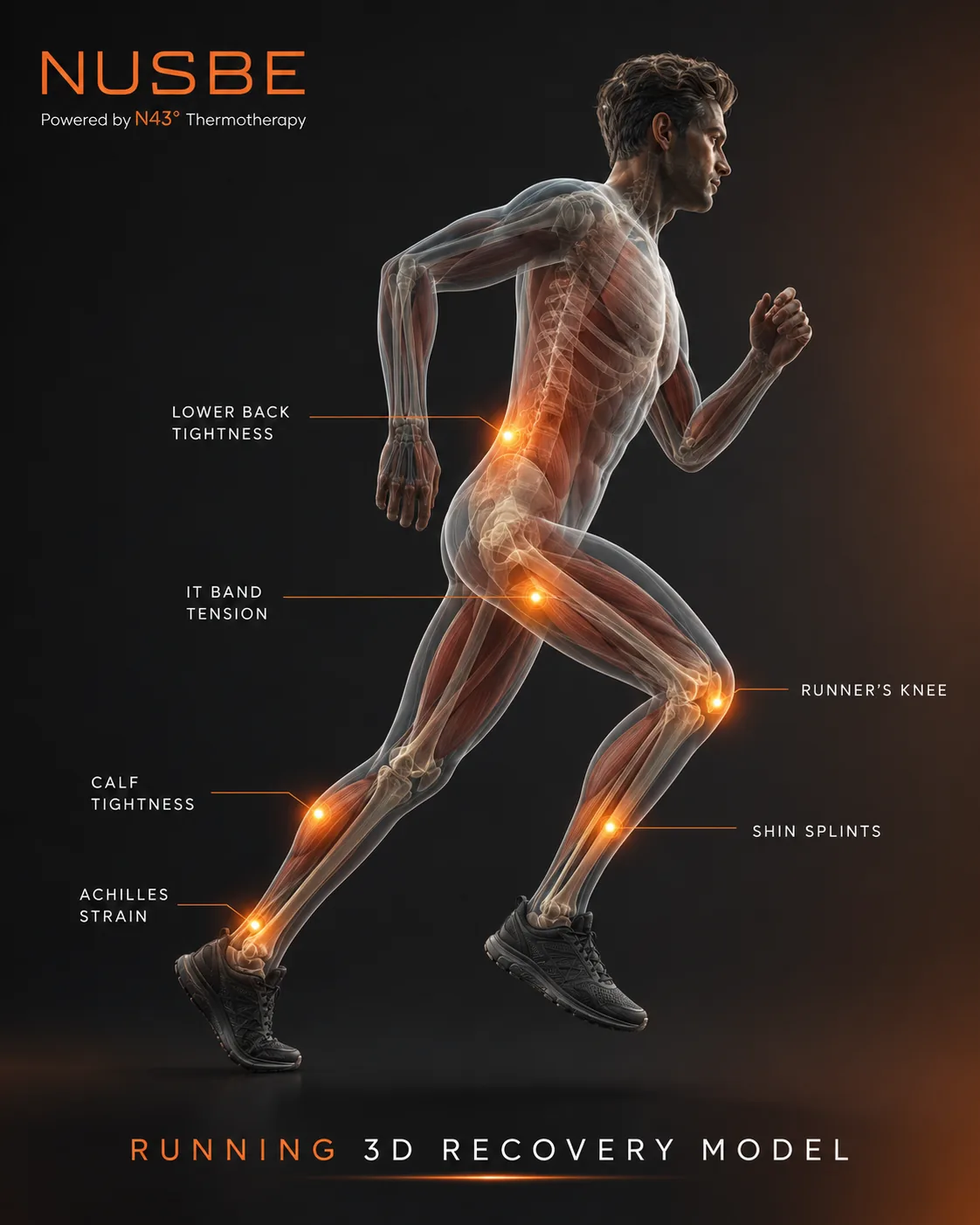
Running recovery model showing lower back, hip, hamstring, knee, calf and Achilles load areas
Running recovery model — lower back, hips, hamstrings, knees, calves and Achilles.

What to notice

Note whether discomfort sits in the calf muscle or nearer the heel, and whether it appears during running, afterwards or on the first steps of the day. Do not assume every pattern needs the same stretch.

Practical next steps

  • Review recent hills, speed sessions and changes in footwear.
  • Stop running when pain affects your stride; avoid repeated test sprints.
  • Get recurring Achilles or calf symptoms assessed before progressing the plan.

When to get help

Seek urgent help for unexplained pain and swelling in one calf. If this occurs with breathlessness or chest pain, seek emergency care immediately. Sudden injury or inability to push off also needs assessment.

Frequently asked questions

Should I massage a swollen calf after a run?

Unexplained one-sided calf swelling needs urgent medical advice rather than massage or heat. A run does not rule out a cause unrelated to muscle soreness.

Evidence referenced in this guide

Related guides

Explore the evidence

Request a NUSBE session