

Why you're sore after hiking, and how long it lasts

A hike may challenge your legs differently from a flat walk, especially with long descents or a pack. Muscle ache afterwards can be delayed soreness; focal knee, ankle or foot pain needs separate attention.

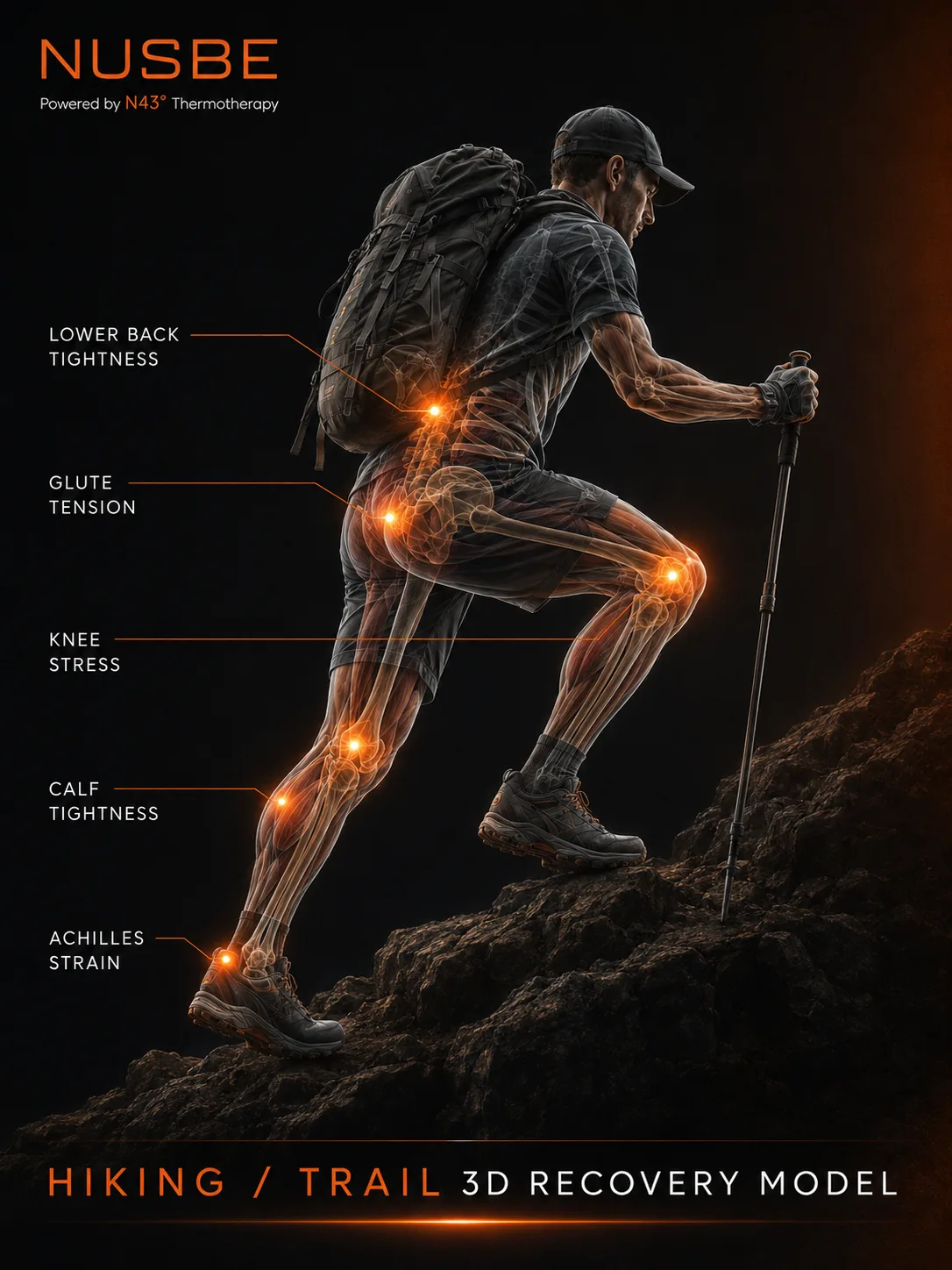
Hiking recovery model showing shoulder, lower back, quad, knee, calf and foot load areas
Hiking recovery model — shoulders, lower back, quads, knees, calves and feet.

What to notice

Record elevation loss as well as distance. Include the trail surface and pack you carried so the next route matches what you actually tolerated.

Practical next steps

  • Check for blisters and localised pain after removing your boots.
  • Choose a shorter, less demanding next walk if stairs or normal walking remain uncomfortable.
  • For future hikes, plan daylight, weather, supplies and a realistic turnaround point.

When to get help

Seek urgent assessment for a badly swollen or deformed knee, inability to bear weight, locking or giving way. A hot, red knee with fever also needs urgent care.

Exploring NUSBE

NUSBE offers operator-guided thermotherapy wellness sessions. Discuss suitability first; this does not replace an injury assessment. See the session experience.

Frequently asked questions

Why can the descent feel harder than the climb?

Descending asks the legs to control each downward step. Treat long descents as a distinct part of the route, rather than assuming the return is the easy half.

How long does ordinary post-exercise soreness last?

Delayed muscle soreness often appears one to three days after unfamiliar activity and usually eases over the following few days. That pattern does not explain sudden injury pain or symptoms that keep worsening.

Evidence referenced in this guide

Related guides

Explore the evidence

Request a NUSBE session