

Downhill hiking, quads and knees

Long descents ask the legs to control repeated downward steps. Thigh-muscle soreness afterwards differs from knee pain that changes your walking or persists on stairs.

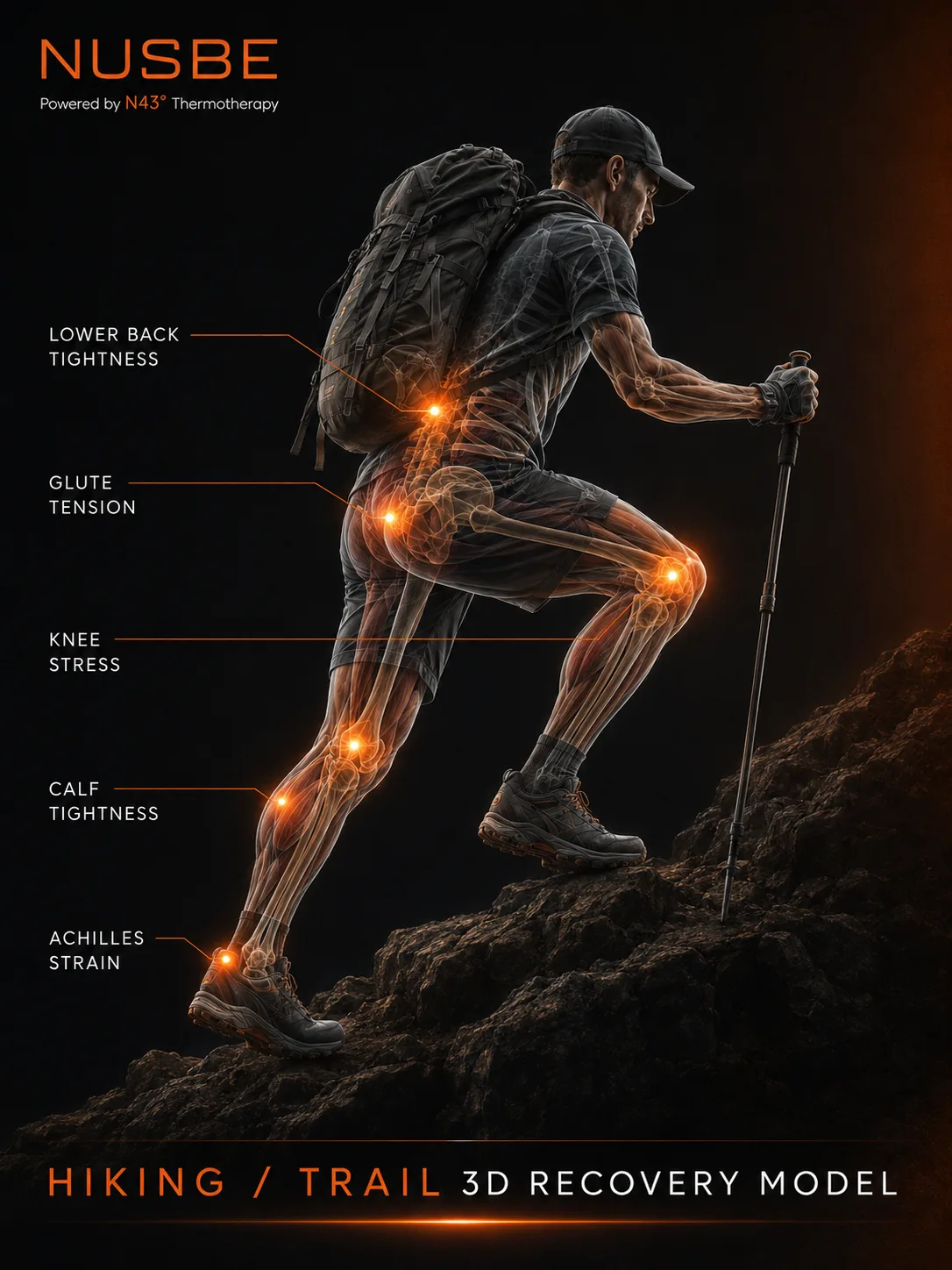
Hiking recovery model showing shoulder, lower back, quad, knee, calf and foot load areas
Hiking recovery model — shoulders, lower back, quads, knees, calves and feet.

What to notice

Check descent length and steepness when planning a hike. A route can have a gentle outward walk and a difficult return; allow time and energy for both.

Practical next steps

  • Choose a pace and footholds that allow controlled steps.
  • Take breaks before fatigue makes the descent rushed or unstable.
  • Plan less descent next time if this was unfamiliar, and assess recurring knee symptoms.

When to get help

Seek urgent assessment for a badly swollen or deformed knee, inability to bear weight, locking or giving way. A hot, red knee with fever also needs urgent care.

Frequently asked questions

Do trekking poles make knee pain safe to ignore?

No. Equipment may help you manage a route, but persistent pain, swelling or an unstable knee still needs assessment.

Evidence referenced in this guide

Related guides

Explore the evidence

Request a NUSBE session