

The serve and shoulder load in tennis

A serving session adds overhead work beyond the match score. If a serve repeatedly hurts, reduce or stop that task and review both technique and recent serving volume.

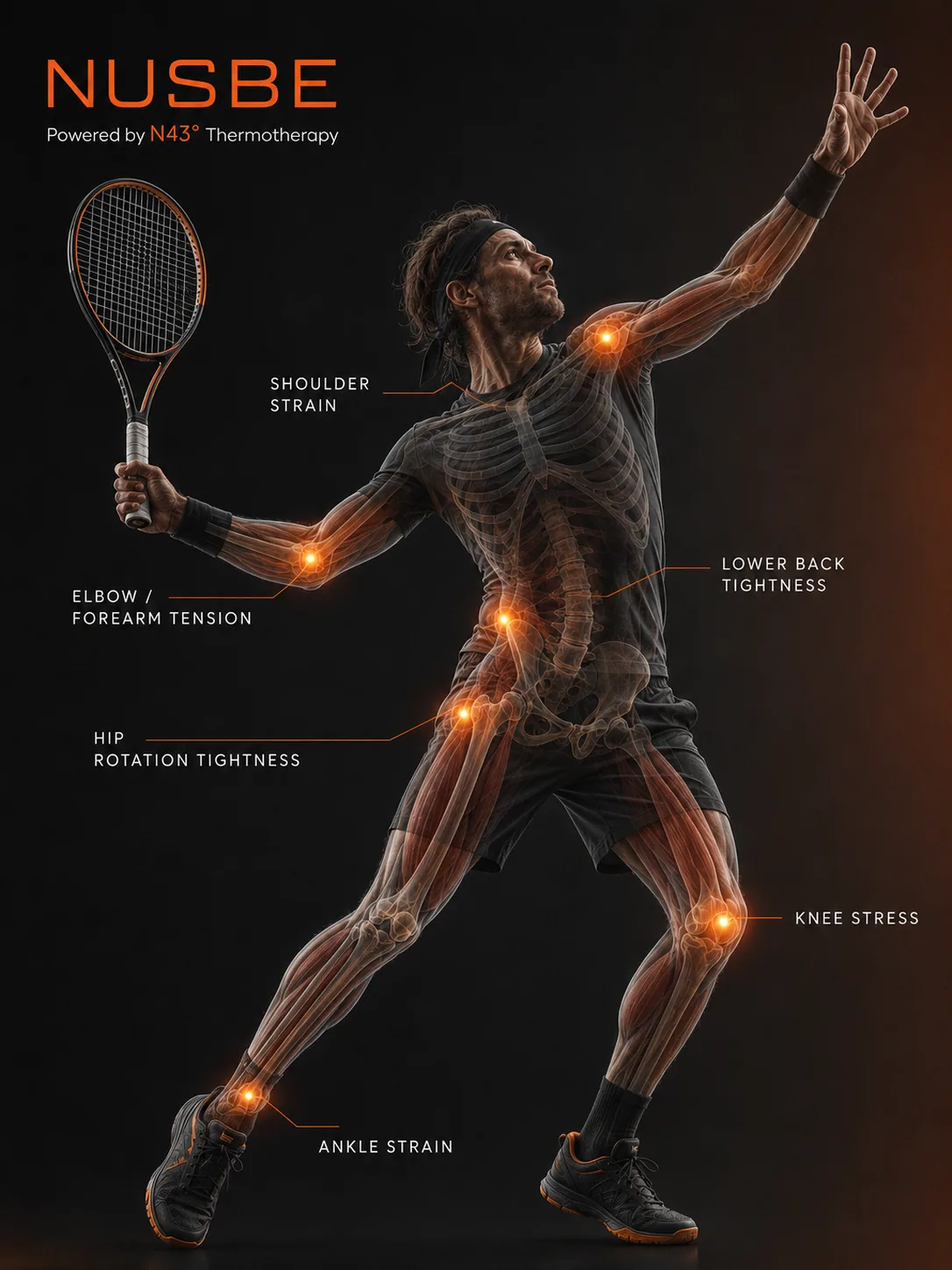
Tennis recovery model showing shoulder, elbow, lower back, hip, knee and ankle load areas
Tennis recovery model — shoulder, elbow and forearm, lower back, hip, knee and ankle.

What to notice

Note whether discomfort occurs in the preparation, acceleration or follow-through. Extra practice buckets can matter even when the rest of the session feels easy.

Practical next steps

  • Count practice serves as well as service games.
  • Ask your coach to review the whole serving movement, not only the shoulder.
  • Get persistent pain or weakness assessed before trying heavier strengthening work.

When to get help

Seek urgent assessment for sudden severe shoulder pain, a changed shape, inability to move the arm or persistent numbness. Arrange a review if pain keeps returning or does not improve.

Frequently asked questions

Should I keep serving at lower speed through pain?

A slower serve is only a useful modification if it is comfortable. Ongoing pain still needs a review; it is not a cue to practise through it.

Evidence referenced in this guide

Related guides

Explore the evidence

Request a NUSBE session