

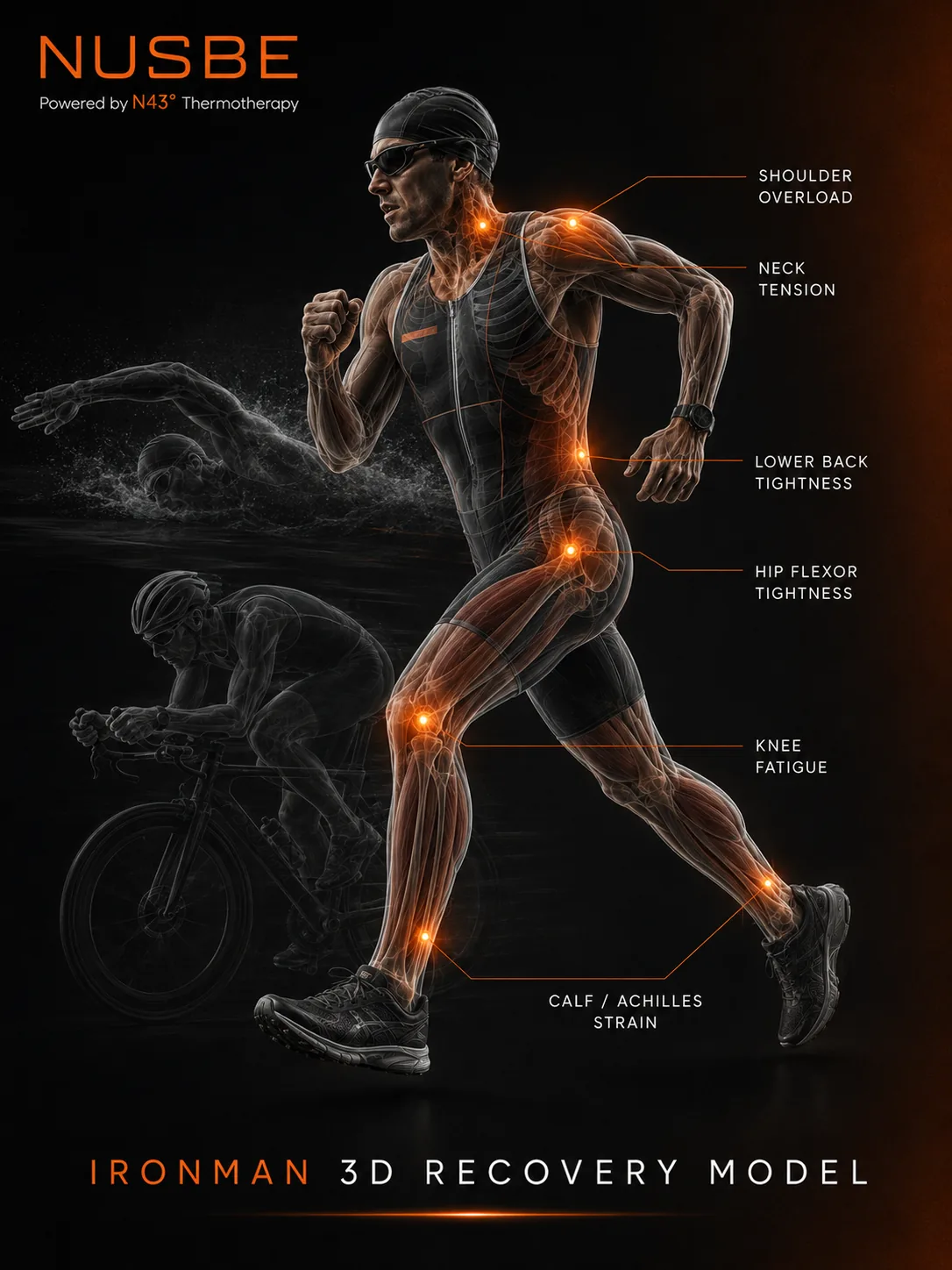
What to notice
Include transitions, strength training, travel and disrupted sleep in the training conversation. An easy swim is not automatically a rest day for a painful shoulder.
Practical next steps
- Mark the demanding sessions across all disciplines on one calendar.
- Adjust the activity that aggravates symptoms instead of replacing it with another painful discipline.
- Review ongoing fatigue or falling performance with your coach and a clinician when needed.
When to get help
Unexpectedly severe muscle pain, dark urine or marked weakness after exercise needs prompt medical attention. Persistent or worsening local pain should also be assessed rather than treated as routine soreness.
Exploring NUSBE
NUSBE offers operator-guided thermotherapy wellness sessions. Discuss suitability first; this does not replace an injury assessment. See the session experience.