
Why you're sore after pickleball, and how long it lasts

Pickleball can leave you sore after more games or harder rallies than usual. Separate general next-day muscle ache from pain after a fall, sudden reach or ankle twist.

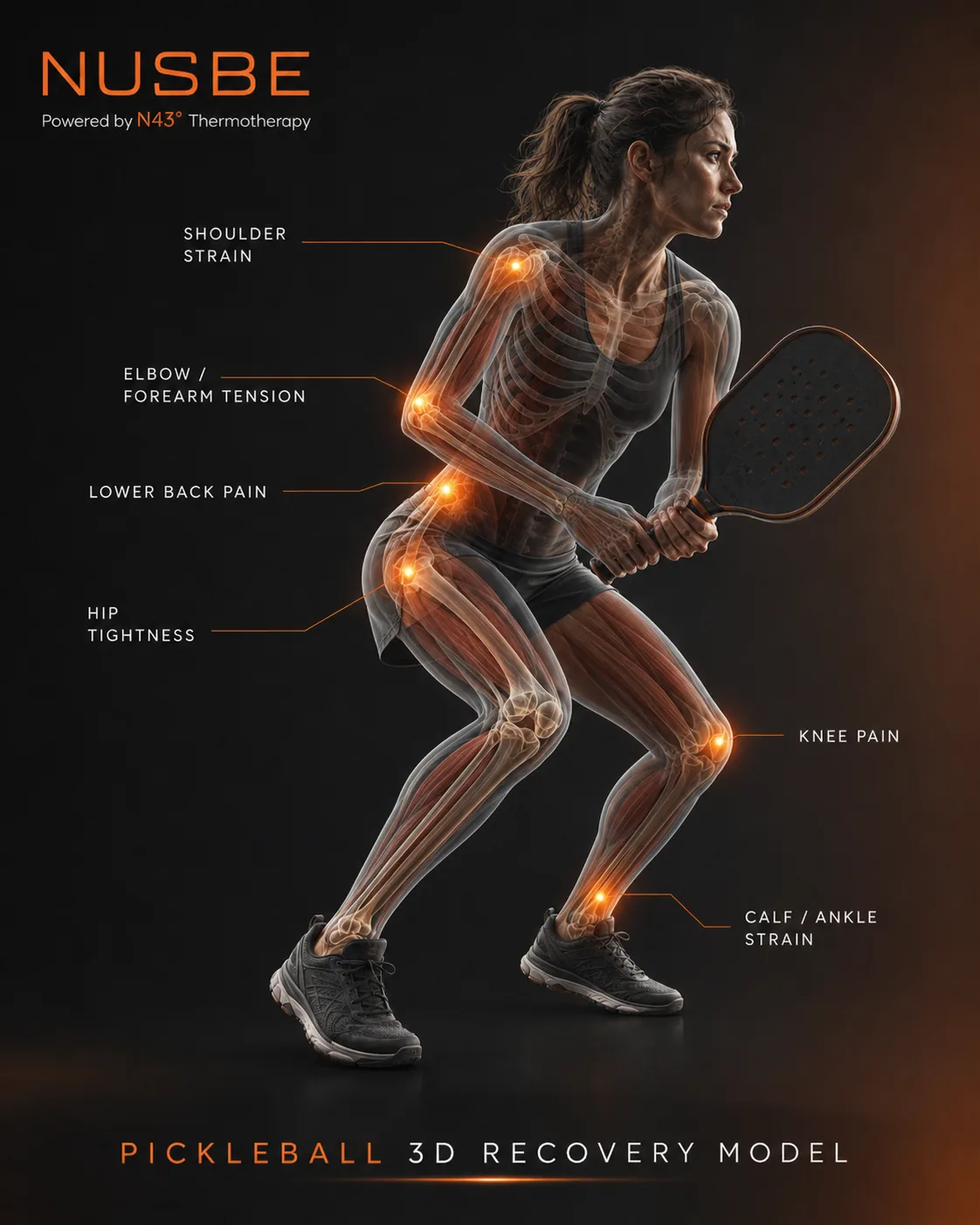
Pickleball recovery model showing shoulder, elbow, lower back, knee and ankle load areas
Pickleball recovery model — shoulder, forearm, lower back, knee and ankle.

What to notice

A social session can keep growing by one more game. Note your total court time and breaks, not just whether the game felt competitive.

Practical next steps

  • Set a stopping point before the session and take breaks between games.
  • Use court-appropriate shoes and start with easy hitting and movement.
  • If one stroke or direction change repeatedly hurts, stop and discuss it with a qualified professional.

When to get help

Arrange assessment for persistent or worsening pain, swelling or difficulty using the area normally. After an injury, seek urgent help for severe pain, deformity, numbness or inability to bear weight.

Exploring NUSBE

NUSBE offers operator-guided thermotherapy wellness sessions. Discuss suitability first; this does not replace an injury assessment. See the session experience.

Frequently asked questions

Is a smaller court automatically easier on the body?

No. Quick starts, reaches and repeated strokes still count as activity. Base the session on your recent fitness and symptoms, not court size.

How long does ordinary post-exercise soreness last?

Delayed muscle soreness often appears one to three days after unfamiliar activity and usually eases over the following few days. That pattern does not explain sudden injury pain or symptoms that keep worsening.

Evidence referenced in this guide

Related guides

Explore the evidence

Request a NUSBE session