
Why you're sore after badminton, and how long it lasts

Badminton asks for repeated lunges, overhead strokes and quick recoveries to the centre of the court. After an unfamiliar session, note whether the discomfort is broad muscle soreness or pain at a particular joint.

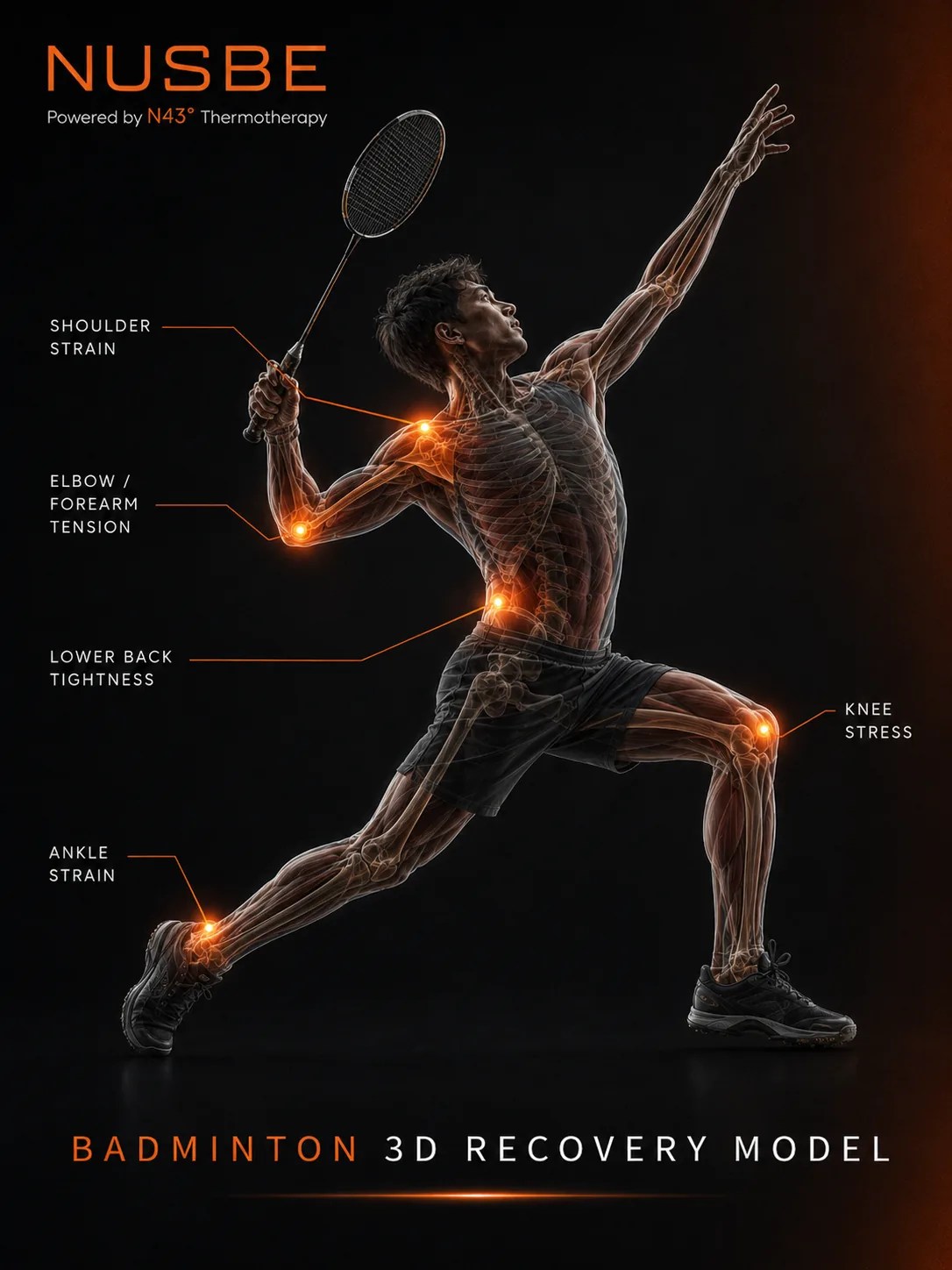
Badminton recovery model showing shoulder, forearm, lower back, knee and ankle load areas
Badminton recovery model — shoulder, forearm, lower back, knee and ankle.

What to notice

Separate the session into footwork and hitting. A long rally session, multi-shuttle drill and repeated smash practice place different demands on the body, even if each lasts the same time.

Practical next steps

  • Record which drill preceded the soreness rather than counting games alone.
  • Reduce repeated deep lunges or overhead hitting if those movements remain painful.
  • Ask a coach to review footwork and stroke technique if the same pattern returns.

When to get help

Arrange assessment for persistent or worsening pain, swelling or difficulty using the area normally. After an injury, seek urgent help for severe pain, deformity, numbness or inability to bear weight.

Exploring NUSBE

NUSBE offers operator-guided thermotherapy wellness sessions. Discuss suitability first; this does not replace an injury assessment. See the session experience.

Frequently asked questions

Is soreness needed to improve at badminton?

No. Soreness is not a target or a reliable measure of a useful session. Judge progress through the skills and workload you can repeat comfortably.

How long does ordinary post-exercise soreness last?

Delayed muscle soreness often appears one to three days after unfamiliar activity and usually eases over the following few days. That pattern does not explain sudden injury pain or symptoms that keep worsening.

Evidence referenced in this guide

Related guides

Explore the evidence

Request a NUSBE session