

Grip, forearms and shoulders in HYROX training

Carries and pulling stations make grip and shoulder work part of the HYROX session. Distinguish temporary hand fatigue from recurring pain, numbness or weakness that affects daily tasks.

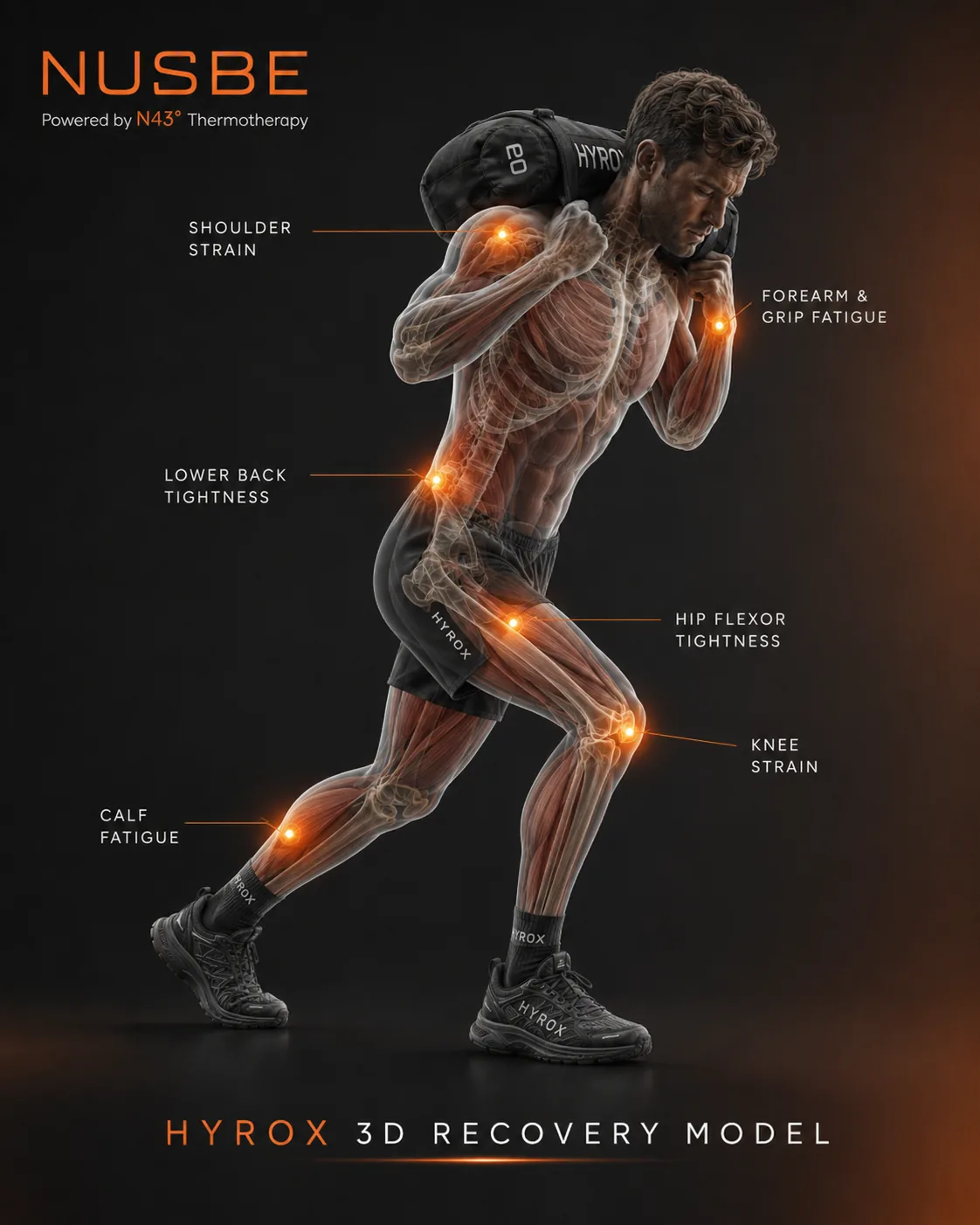
Hybrid racing recovery model showing shoulder, forearm, lower back, quad, knee and calf load areas
Hybrid racing recovery model — shoulders, forearms, lower back, quads, knees and calves.

What to notice

Include grip-heavy gym exercises alongside race stations. Adding carries after an already demanding pulling session changes the total workload.

Practical next steps

  • Identify whether pain appears while gripping, carrying, pulling or reaching overhead.
  • Reduce the provoking task instead of using a tighter grip to compensate.
  • Review technique and weekly station volume with your coach.

When to get help

Seek urgent assessment for sudden severe shoulder pain, a changed shape, inability to move the arm or persistent numbness. Arrange a review if pain keeps returning or does not improve.

Frequently asked questions

Is grip failure just a fitness problem?

Fatigue and a painful or weak hand are different. Persistent weakness, numbness or pain warrants assessment rather than more grip training.

Evidence referenced in this guide

Related guides

Explore the evidence

Request a NUSBE session